3D State-of-the-Art Imaging
New diagnostic & interventional capabilities
Advanced 3D high-resolution visualization of surgical hardware instrumentation, endoscopic & arthroscopic approaches.
 Skyentia Technologies
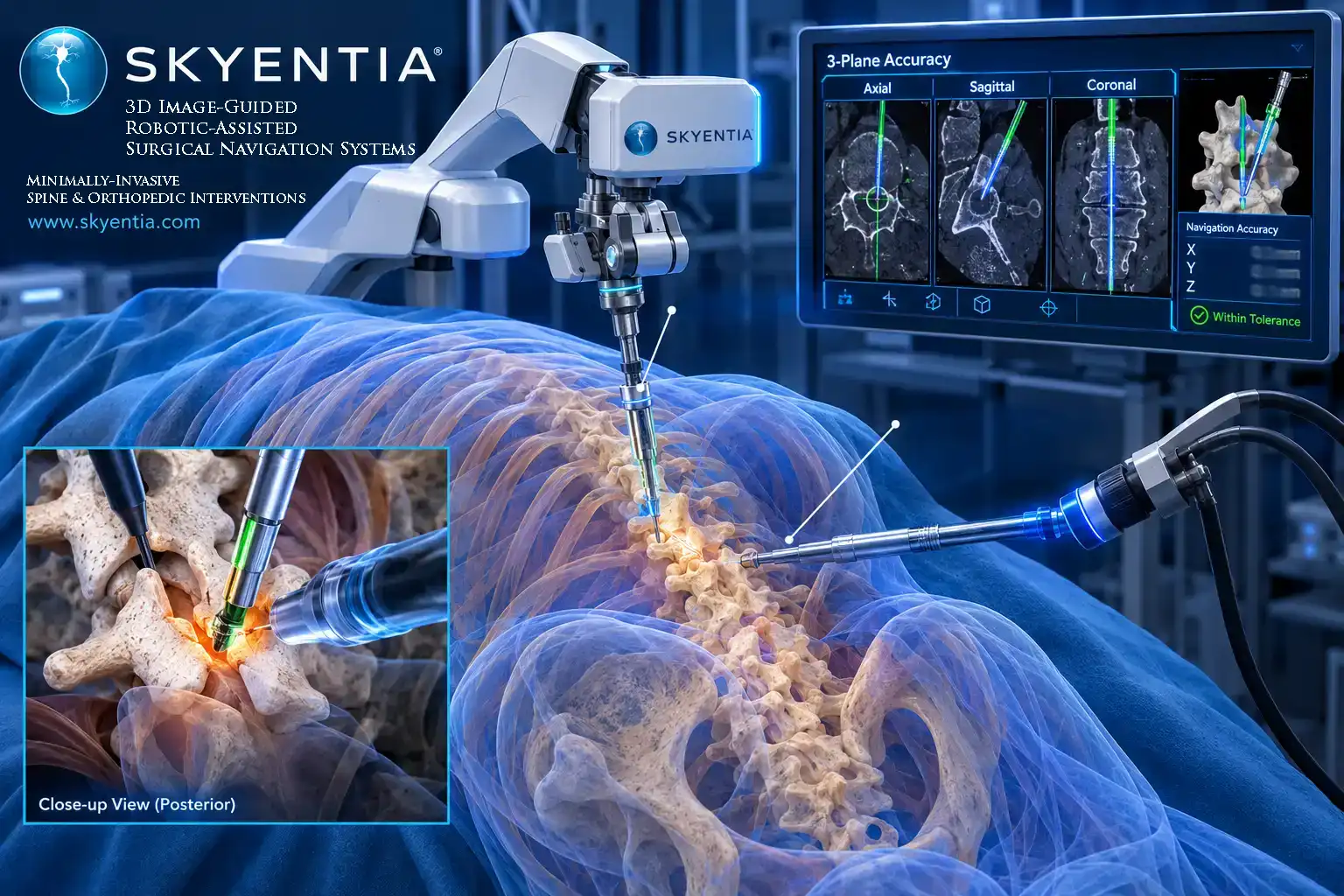
3D Image-Guided Tissue Engineering Interventions & Robotically-Assisted Surgery
with AI-Optimized Mapping & Targeting
for Precision Accuracy
in Minimally-Invasive Reconstructive Techniques
for Tissue Repair and Enhanced Recovery
in Spine, Nerve, Joint, & Orthopedic Injuries
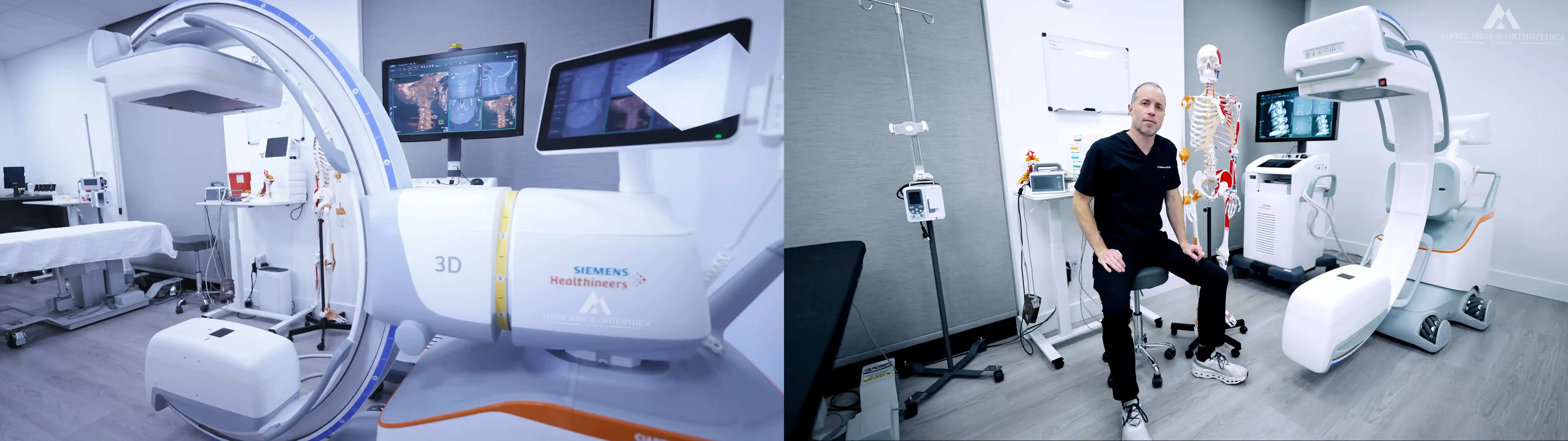
Minimally-Invasive Image-Guided Procedures
Complex Spinal Disorders & Interventions
Cervical, Thoracic, Lumbar, & Sacral Spine Injuries
Vertebral Fractures & Pars Defect Repair
Upper Cervical Spinal Instability Interventions
Atlanto-Axial & Cranio-Cervical Instability
Degenerative Disc Bulges & Herniations
Spinal Spondylosis & Facet Arthritis
SI Joint Instability & Sacral Injuries
Interventional Orthopedics
Joint, Arthritis, & Cartilage Patching Repair
Meniscus, Tendon, Ligament, & Labral Repair
Neuropathy, Radiculopathy, Plexopathy
Nerve Decompression & Tunnel Syndromes
Nerve Blocks, Transections, Ablations, & Ganglion Blocks
Thoracic Outlet Syndrome & Brachial Plexus Injuries
Dynamic Imaging of Complex Injuries & Conditions
High-Resolution 3D CT-Guided & Ultrasound-Guided Procedures
Micro-Endoscopic & Arthroscopic Procedures
Stem Cell Therapies
PRF & PRP Injections
Stem Cell Patches & Regenerative Scaffolding Matrix
Tissue Engineering & Stem Cell Hydrogels
Tissue Reconstruction, Patching, & Repair Strategies
Targeted Peptides & Biologics
Surgery Alternatives for Joint Preservation
Vascular Access & Doppler Flow Imaging
Brain & Spinal Cord Injuries
Acute & Chronic Pain Interventions
Emergency Critical Care
Specialized Procedural Customization with Advanced Imaging

Skyentia Technologies is focused on innovative projects pertaining to biomedical engineering, biotechnology, biomedical devices, tissue engineering, and minimally-invasive surgical interventions. This includes the development of 3D image-guided robotic-assisted surgery and interventions for spine & orthopedic interventions, 3D tissue engineering strategies for tissue repair, novel interfaces for neural implant devices, and neuroprotective interventions for traumatic brain and spinal cord injuries. These technologies also further advance biologic 3D tissue-engineering approaches for injury repair & enhance targeting capabilities with micromillimeter accuracy.
These systems hold tremendous values for treatment of a wide variety of complex spine, orthopedic, joint, nerve, & sports medicine injuries & pain conditions, with a focus on minimally-invasive image-guided interventional procedures to directly target and repair specific tissue injuries. This technology enables rapid use of time-sensitive tissue engineering technologies, keeps patients under anesthesia for dramatically shorter times, increases operating room efficiency, guides the most minimally-invasive approach possible, and most importantly increases targeting accuracy, thereby enhancing safety and outcomes.
Dr. Richard J. McMurtrey MD, MSc is the founder and CEO, and as both a surgeon and biomedical engineer, he is one of the only doctors in the world who has both neurosurgical and orthopedic surgery expertise as well as biomedical engineering expertise from the rigorous and prestigious program at the University of Oxford. He has made many research discoveries at some of the best university research labs in the world and published works in top-tier research journals. He was the first to introduce tissue engineering applications in surgical interventions use minimally-invasive 3D approaches to many types of injury repair, and he continues research work in developing the most cutting-edge 3D minimally-invasive image-guided robotic systems in combination with novel 3D tissue engineering designs to best address a wide variety of complex injuries in the least invasive and most reparative way possible.
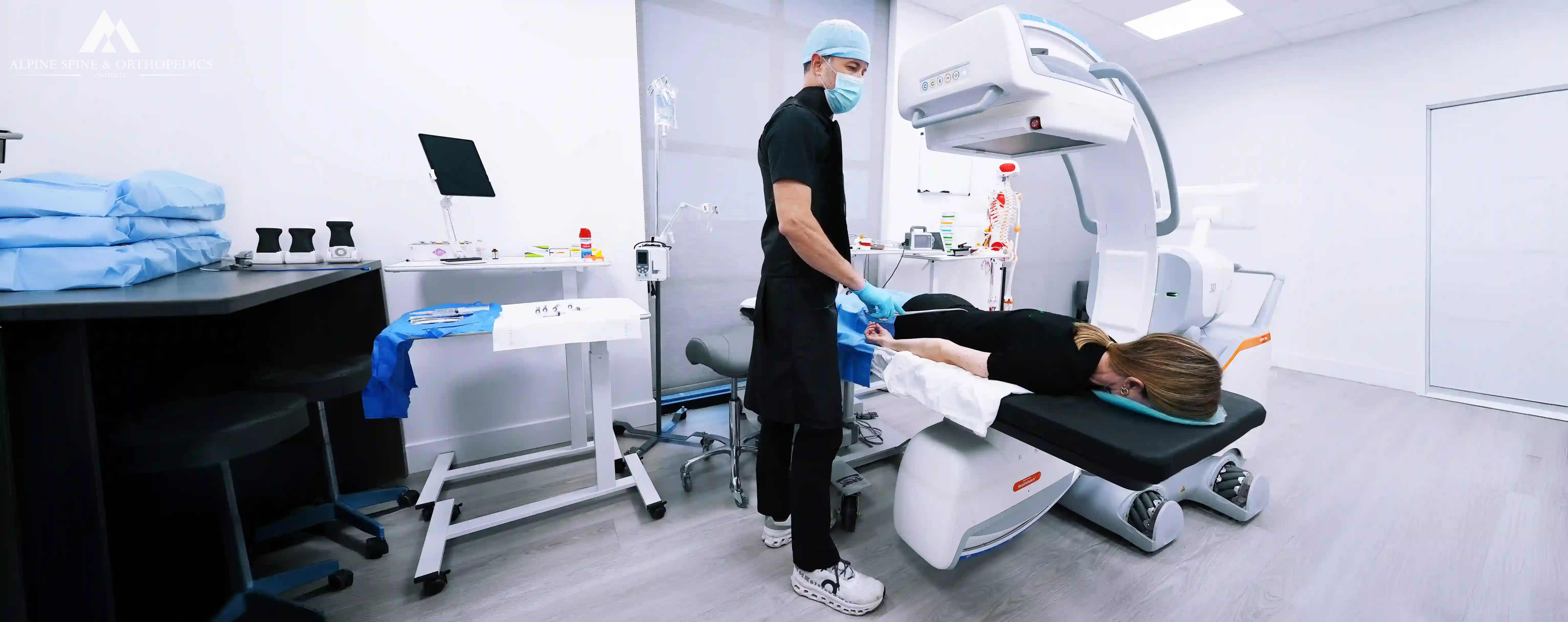

New diagnostic & interventional capabilities
Advanced 3D high-resolution visualization of surgical hardware instrumentation, endoscopic & arthroscopic approaches.

Unlock innate rapid healing potential
The most advanced spine & orthopedic toolkit for complex anatomy as well as minimally-invasive image-guided procedures.

Orthobiologic Plasma & Cell Therapies
Tissue engineering can provide cellular repair & reinforcement of tissue architecture, especially when anchored to injury sites with protein scaffolds to enhance cell survival, integration, & repair using 3D navigation.

Regenerative Scaffolding Matrix & Hydrogel Patches
Regenerative agents like stem cells & growth factors can be embedded in sticky biomaterial hydrogels & scaffolding matrix and can be used to patch, cushion, reinforce, & rebuild injured tissues.
Cutting-edge 3D Robotically-Assisted Procedural Navigation